Ministering Healing in the Hospital: Taking Authority, Releasing Faith, and Shifting Atmospheres
When someone we love is hospitalized, emotions run high. Machines beep, doctors give medical updates, and family members are stretched thin with worry and exhaustion. Yet in the midst of all this, as believers in Christ, we are not powerless. Jesus gave us His authority to heal the sick, cast out demons, and release life wherever death tries to reign. Hospitals are places of both natural treatment and spiritual battlefields. And when I go into a hospital room, I don’t just visit—I go in to shift the atmosphere, evict demonic influence, and release the presence of God.
This blog is not simply a story of what I do; it is a teaching guide for you. You can use these strategies the next time you visit a friend or family member in the hospital. The enemy may think he has the upper hand in places of sickness, but the truth is that when the Spirit of God walks in with you, the entire spiritual environment can change.
Preparing Myself Before I Go
Before I even walk through the hospital doors, I make sure I am spiritually prepared. This is not a casual visit; it is a mission. Hospitals are often filled with grief, trauma, and lingering spiritual residue from sickness and death. You cannot go in unprepared.
The first thing I do is anoint myself with oil. As I apply the oil, I declare out loud that no sickness, disease, or death will attach itself to me. I bind and restrict any demonic spirits from transferring to me or attacking me in retaliation. I put on the full armor of God (Ephesians 6:10–18) and cover myself in the blood of Jesus. These declarations are not ritual; they are my shield. I refuse to go into battle without protection.
I also prepare a healing care package. Inside is a small bottle of anointing oil, a prayer cloth, a healing bracelet, and a booklet I’ve written to teach how to use anointing oil biblically. Sometimes I add healing scriptures or even a communion kit. This is not just a gift to the person; it is a faith package—a tangible reminder that God heals, delivers, and restores. At times, I also bring my book, Healed At Last, which has over 500 declarations for healing.
James 5:14 reminds us: “Is anyone sick among you? Let him call for the elders of the church, and let them pray over him and anoint him with oil in the name of the Lord” (MEV). When we bring oil, prayer cloths, and biblical teaching, we are stepping into obedience to this scripture.
Cleansing and Claiming the Room
When I arrive at the hospital, I don’t start with conversation. I start with the atmosphere. Hospitals are filled with spiritual residue. Demons do not disappear when a person dies; they linger and attach. If all demons returned to hell when someone passed away, there would be no demons left on earth. That’s why the first act must be to cleanse the room and take authority over it.
I begin by anointing the doorposts and windows. Just as the Israelites marked their doorframes with lamb’s blood in Exodus 12, symbolizing protection from death, I mark the room with oil. I declare that no spirit of death or infirmity can cross the threshold. I move to the windows, declaring that no demonic influence can gaze in or oppress through those entry points.
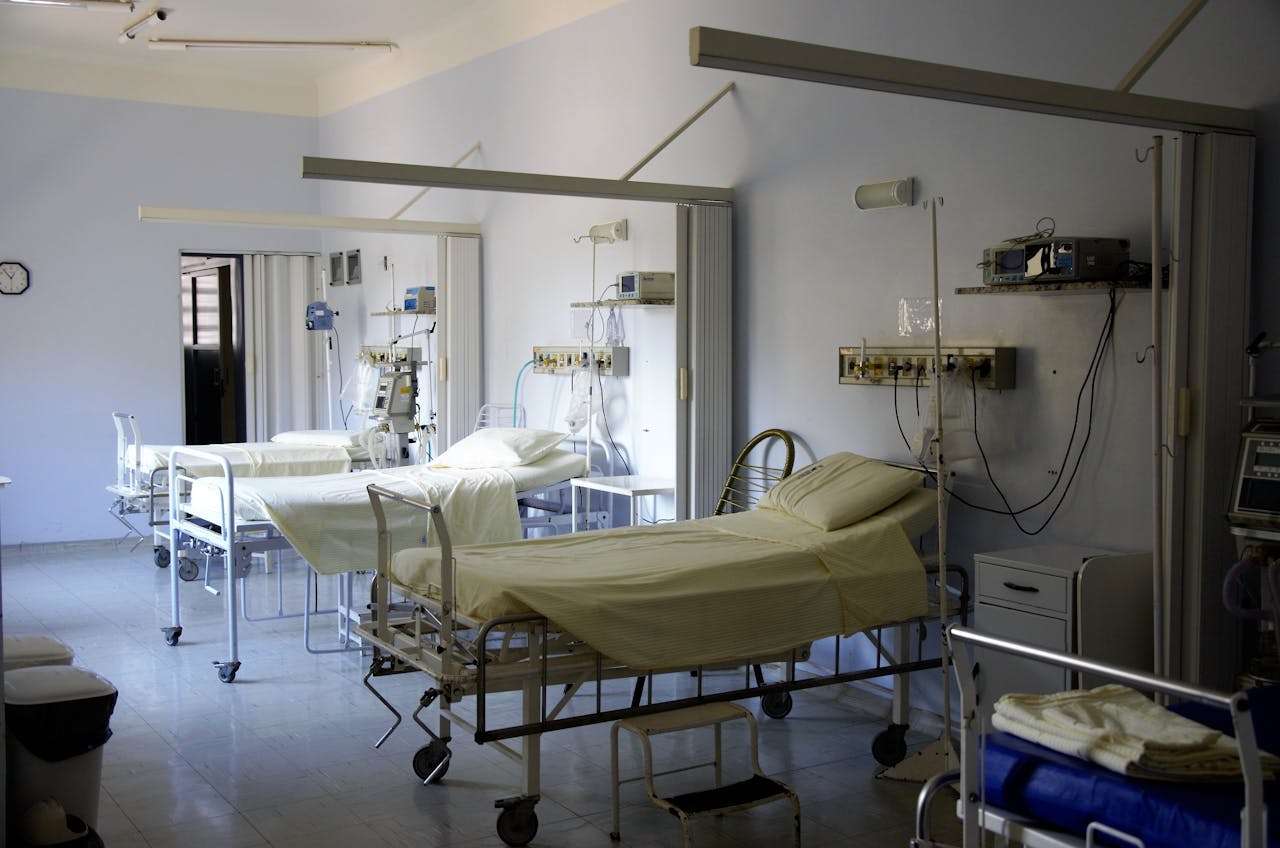
Next, I anoint the hospital bed, the machines, and the equipment. These are the very tools that touch the person’s body, and I want them submitted to the Spirit of God. I pray that every machine functions properly without malfunction or harm, and I declare that the bed will be a place of rest, not torment.
Finally, I begin to speak directly to the unseen realm. Out loud, with authority, I command every spirit of death, sickness, virus, disease, trauma, fear, confusion, and infirmity to leave the room in Jesus’ name. I cancel every word curse spoken—whether by doctors, nurses, or even family members. I bind and evict spirits of lust, torment, or oppression that may have attached themselves to that place.
And then, I invite God’s angels to take their place. I pray for them to ascend and descend in the room, guarding every corner, surrounding the person’s bed, and standing as heavenly sentinels. Where demons are evicted, angels must fill the atmosphere.
Ministering Directly to the Person
Once the room has been cleansed and consecrated, I turn my attention to the one who is sick. I begin by anointing them with oil—on their forehead, their hands, or specific areas of the body that need healing. If they are in too much pain to move or speak, I still speak aloud, declaring that the blood of Jesus is flowing into their body.
I often use prayer cloths, placing them on areas where healing is needed. This is a biblical practice. Acts 19:11–12 tells us: “God worked powerful miracles by the hands of Paul, so that even handkerchiefs or aprons which had touched his body were brought to the sick, and the diseases left them and the evil spirits went out of them.” The same power that worked through Paul can still work through us today.
If the person is experiencing pain, I command the spirit of pain to leave. I don’t beg God to take it away; I use the authority He already gave me. I say, “Pain, go now in Jesus’ name. Body, align with the Word of God.” Pain is not from God, and it has no legal right to stay when confronted in the name of Jesus.
Equipping and Empowering the Family
One of the most important parts of hospital ministry is equipping the family. They are often exhausted, frightened, and under spiritual attack themselves. They may not realize the authority they carry, so I take time to teach them.
I show them how to use the anointing oil. I encourage them to anoint their loved one several times a day, not just once. I leave them with the oil, the prayer cloth, and my booklet so they have tangible tools to continue in faith.
I urge them to rebuke negative medical reports and word curses. I remind them that doctors often speak in facts, but we must counter those facts with truth. Proverbs 18:21 tells us, “Death and life are in the power of the tongue, and those who love it will eat its fruit.” Every word we speak in that room matters.
I encourage the family to declare John 10:10: “The thief does not come, except to steal and kill and destroy; I came that they may have life, and that they may have it more abundantly.” They must learn to speak life, not death. Even if the prognosis looks grim, faith speaks what God says, not what fear suggests.
I also minister directly to the family members. I anoint them, pray peace over them, and release rest and strength into their bodies. Many times, caregivers become physically and spiritually depleted. They need just as much ministry as the patient.
Finally, I bind spirits of family disunity. Hospitals can bring out stress and conflict in families. The enemy thrives in chaos, so I bind spirits of strife and frustration, and I release unity and peace over the household.
Guarding the Atmosphere
One of the most overlooked aspects of hospital ministry is the atmosphere created by what is playing on the television or being spoken in the room. The enemy often uses background noise to keep people in a cycle of fear and unbelief. Violent programs, endless news reports, or negative conversations can create an atmosphere where faith is stifled.
I warn families to be cautious. Instead of letting anything play on the television, I encourage them to put on worship music, play audio scriptures, or read the Bible aloud. Fill the room with the Word of God. Create an environment saturated with faith, not fear.
Romans 10:17 reminds us, “So then faith comes by hearing, and hearing by the word of God.” What we hear matters. If we want faith to rise, we must make sure the atmosphere is filled with the right sounds.
Why This Matters
Why is all of this important? Because when someone is in the hospital, they are not just battling a medical condition—they are often in the middle of a spiritual war. Spirits of death, fear, trauma, and pharmakia are active in those environments. Demons linger where death has been. If the spiritual atmosphere is not dealt with, the person may fight harder than necessary or be overwhelmed by demonic oppression.
Jesus not only healed the sick but also cast out demons and spoke peace into storms. We are called to follow His example. Luke 9:1-2. says: “Then He called His twelve disciples together and gave them power and authority over all demons and to cure diseases. He sent them to preach the kingdom of God and to heal the sick.”
We cannot afford to be passive. When we walk into a hospital, we carry the presence of the Holy Spirit. We are the ones who can shift the atmosphere from death to life, from fear to faith, from oppression to peace.
Final Encouragement
If you have ever felt powerless walking into a hospital, I hope this has equipped and encouraged you. You have the authority of Jesus Christ. You have the Word of God. You can anoint, pray, rebuke, bind, and release. You can teach families to fight with faith instead of fear.
The next time you visit someone in the hospital, don’t just sit silently by their bed. Don’t just wait for the doctors to give reports. Take authority over the atmosphere. Evict demonic spirits. Release angels. Anoint the person. Teach the family. Guard the environment. And above all, speak life.
You are not just visiting—you are going in as a representative of Christ, filled with His Spirit, carrying His power. Hospitals may be places of sickness, but they can also become altars of healing when we walk in obedience and authority.